
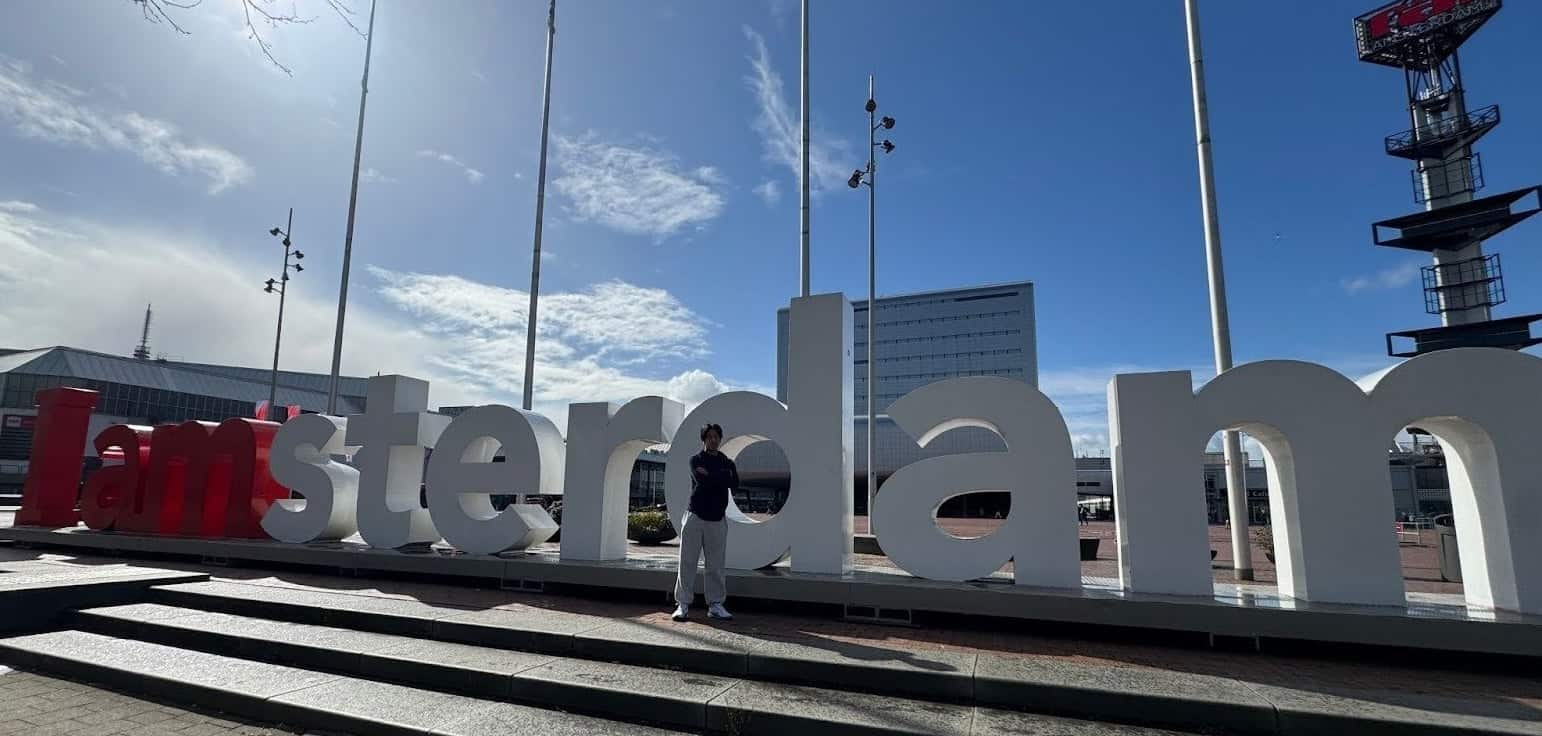
KubeCon + CloudNativeCon Europe 2026 is one of the biggest open-source conferences in the world, organized by the Cloud Native Computing Foundation (part of the Linux Foundation, which manages major projects like Linux). It brings together the global cloud native community, and being selected as a speaker is extremely competitive, with acceptance rates in the single digits.
This year, over 13,000 people gathered in Amsterdam in March. As one of the youngest presenters there, I got the opportunity to share my poster on hurricane prediction using open-source projects.
When I first arrived, I was honestly overwhelmed. The RAI convention center was massive, and stepping inside made it feel even bigger. It didn’t really hit me until then just how huge this event was.
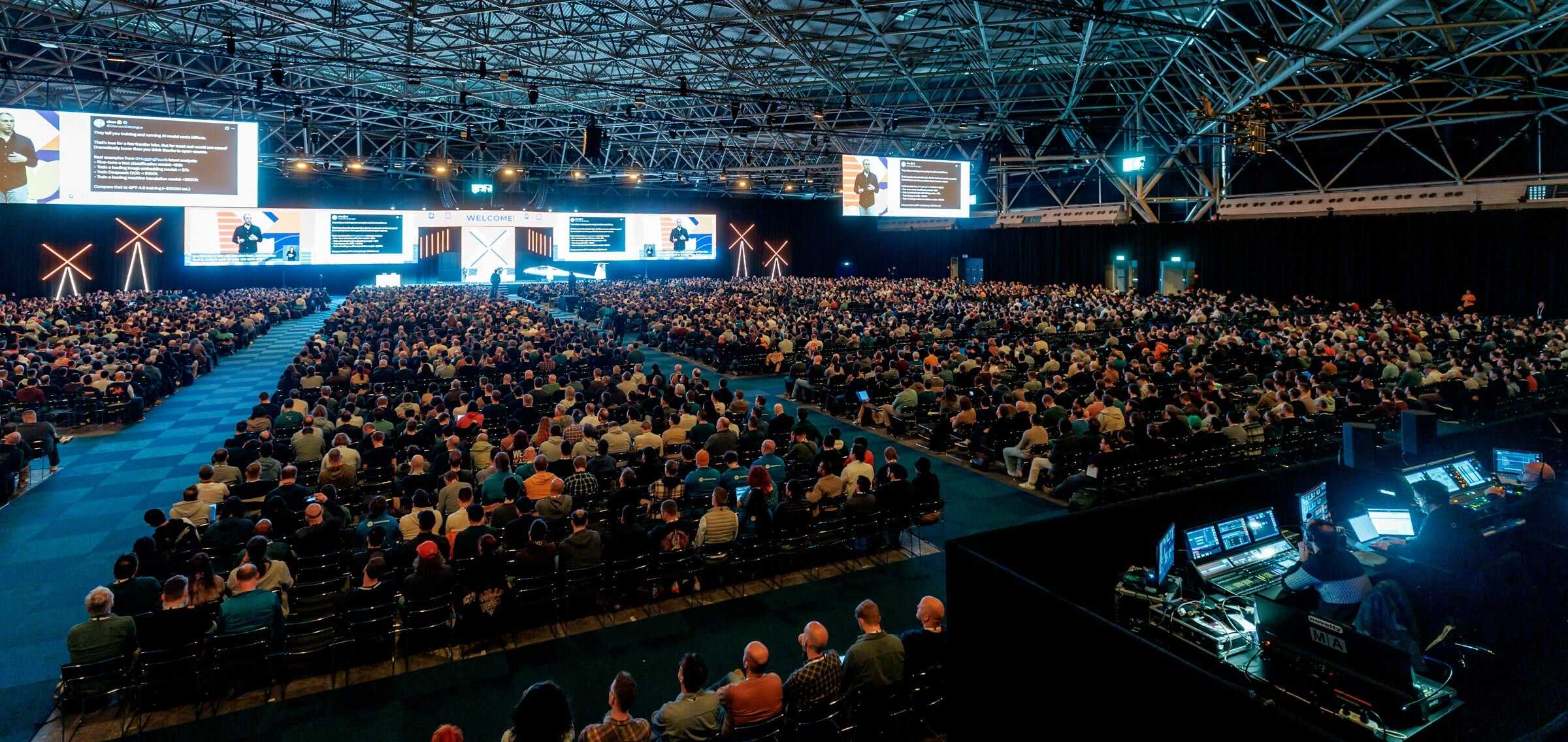
The packed keynote room
My Poster Session
I originally built my hurricane model during a class in my junior year, using a modified version of Computational Fluid Dynamics (CFD). Over time, it evolved into a much bigger project.
I ended up combining tools like Kubernetes, kgateway, and vLLM to run different services. Along with FourCastNet and an improved version of my CFD model, the goal was to make hurricane prediction more efficient and affordable using inference-aware routing.
My poster was titled “Efficient Inference for Hurricane Data and Future Movement Prediction”.
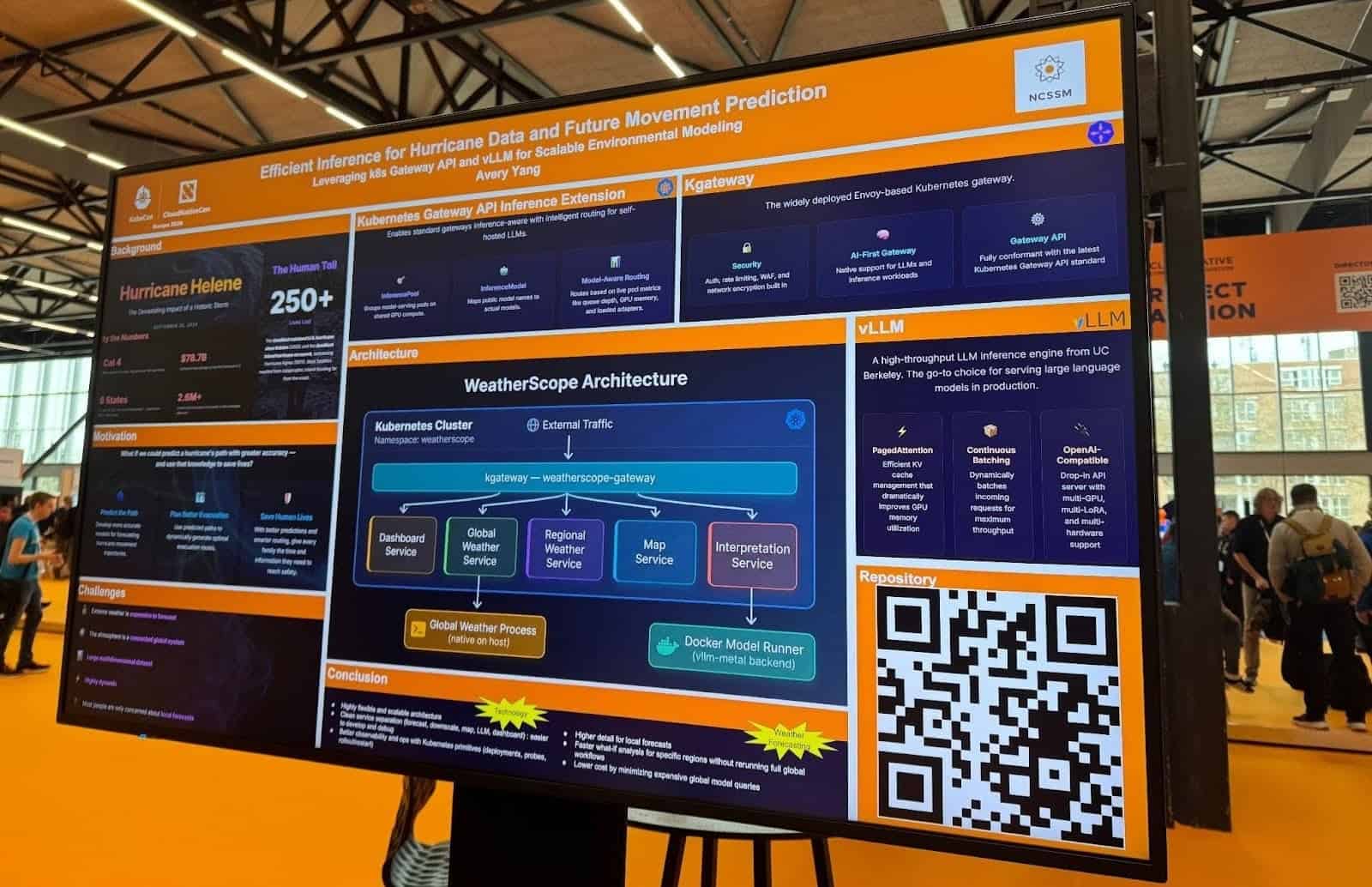
My poster
I wasn’t sure if anyone would even stop by. But pretty quickly, a crowd started forming, way more people than I expected.
I presented, which was a nervous but fun experience, and then demoed my project on my laptop and answered waves of questions. It was neat hearing from people why they came. People were working on similar weather models, curious what a High Schooler had to say, and one visitor was even from my hometown!
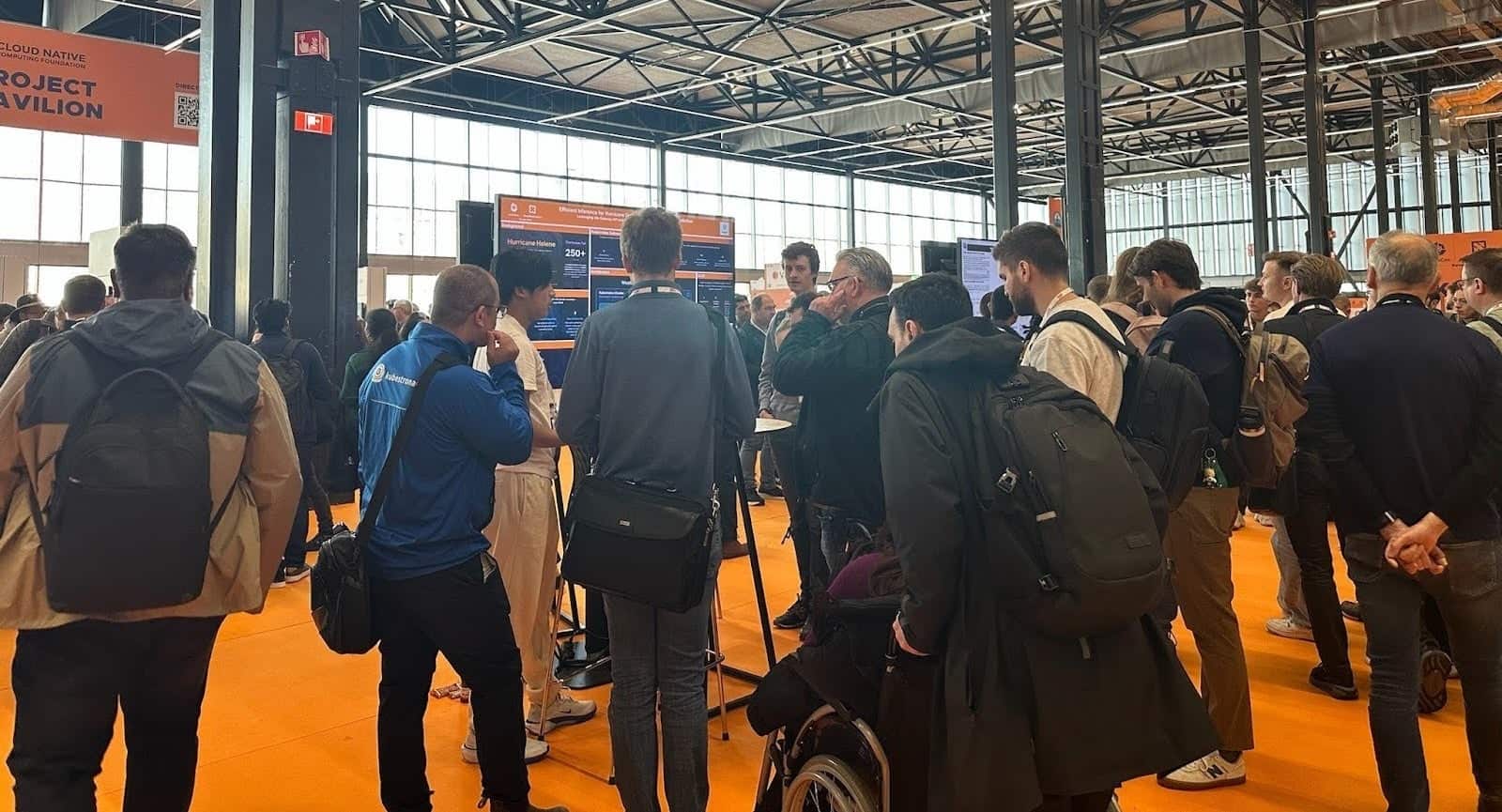
Presenting the poster to a group
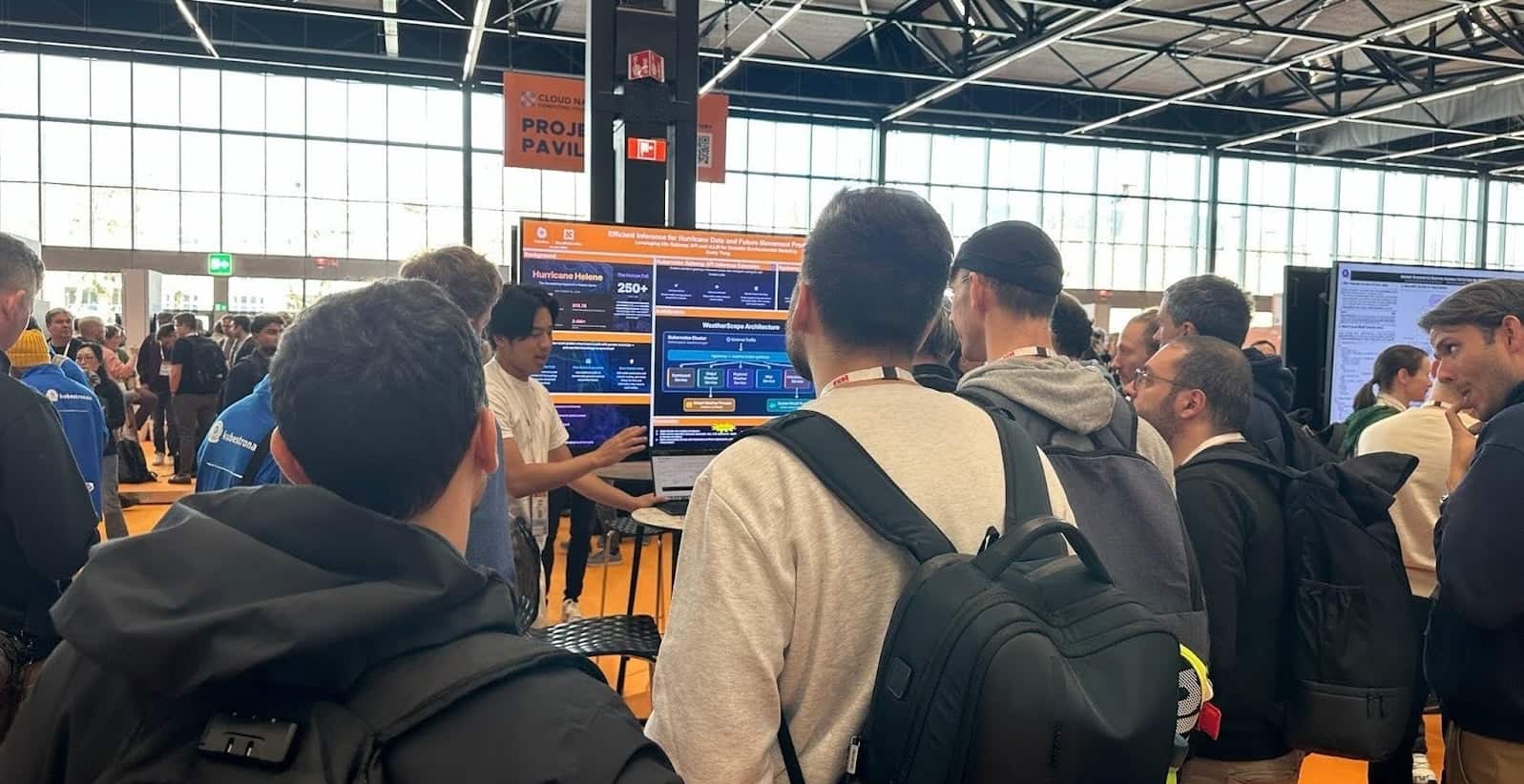
Demo-ing my project on my laptop
Exploring sessions
When I wasn’t presenting, I tried to attend as many sessions as I could.
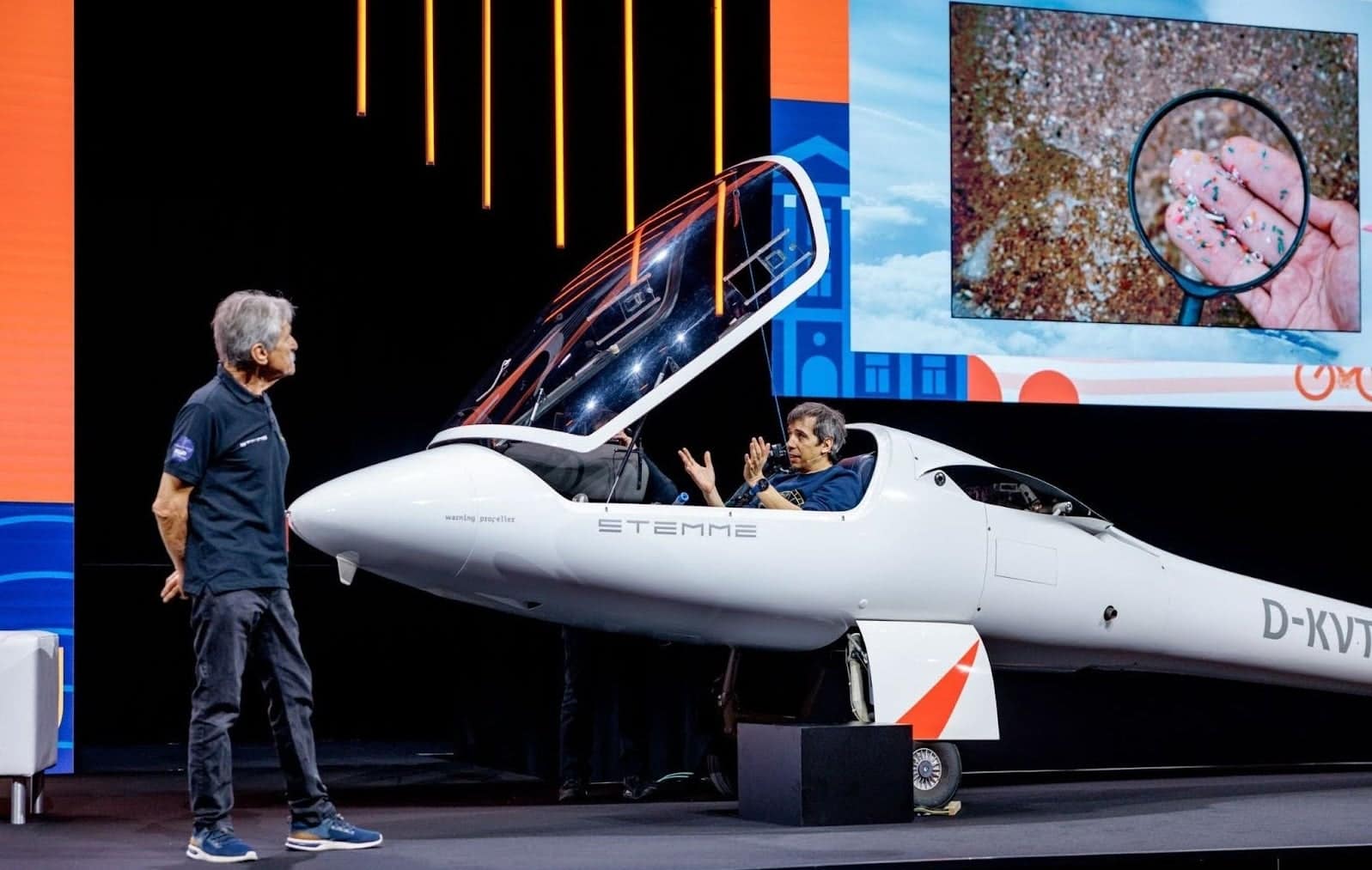
One of the coolest ones featured a high-altitude glider powered by cloud native technologies, showing footage of it flying over the Himalayas. It was awesome to see open source being applied in sustainable aviation with extremely low energy and emissions.
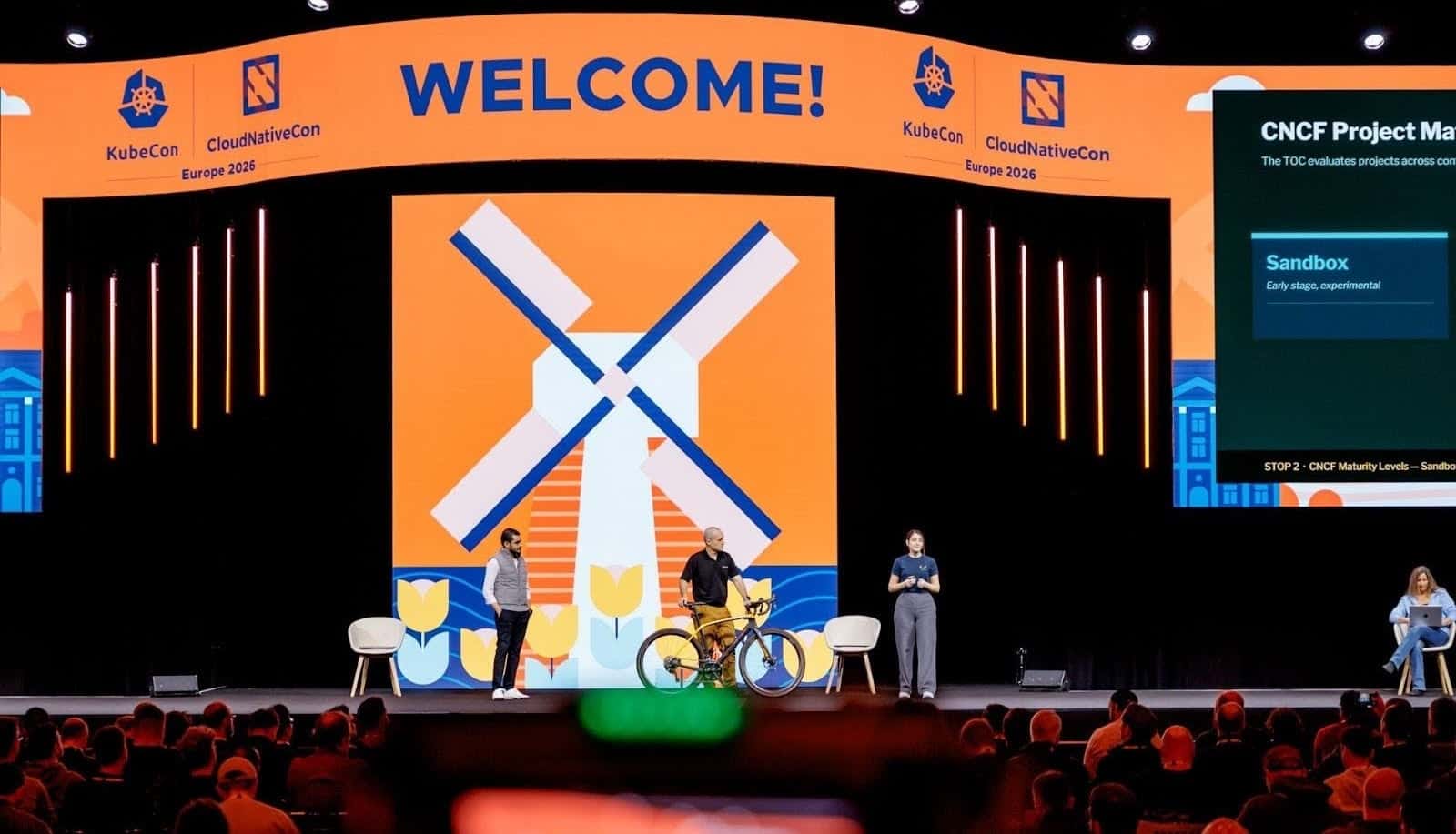
Another memorable session literally had a bicycle shop and a bike brought on stage. They used it to explain the CNCF project maturity lifecycle, which sounds abstract, but the analogy actually made it really easy to understand.
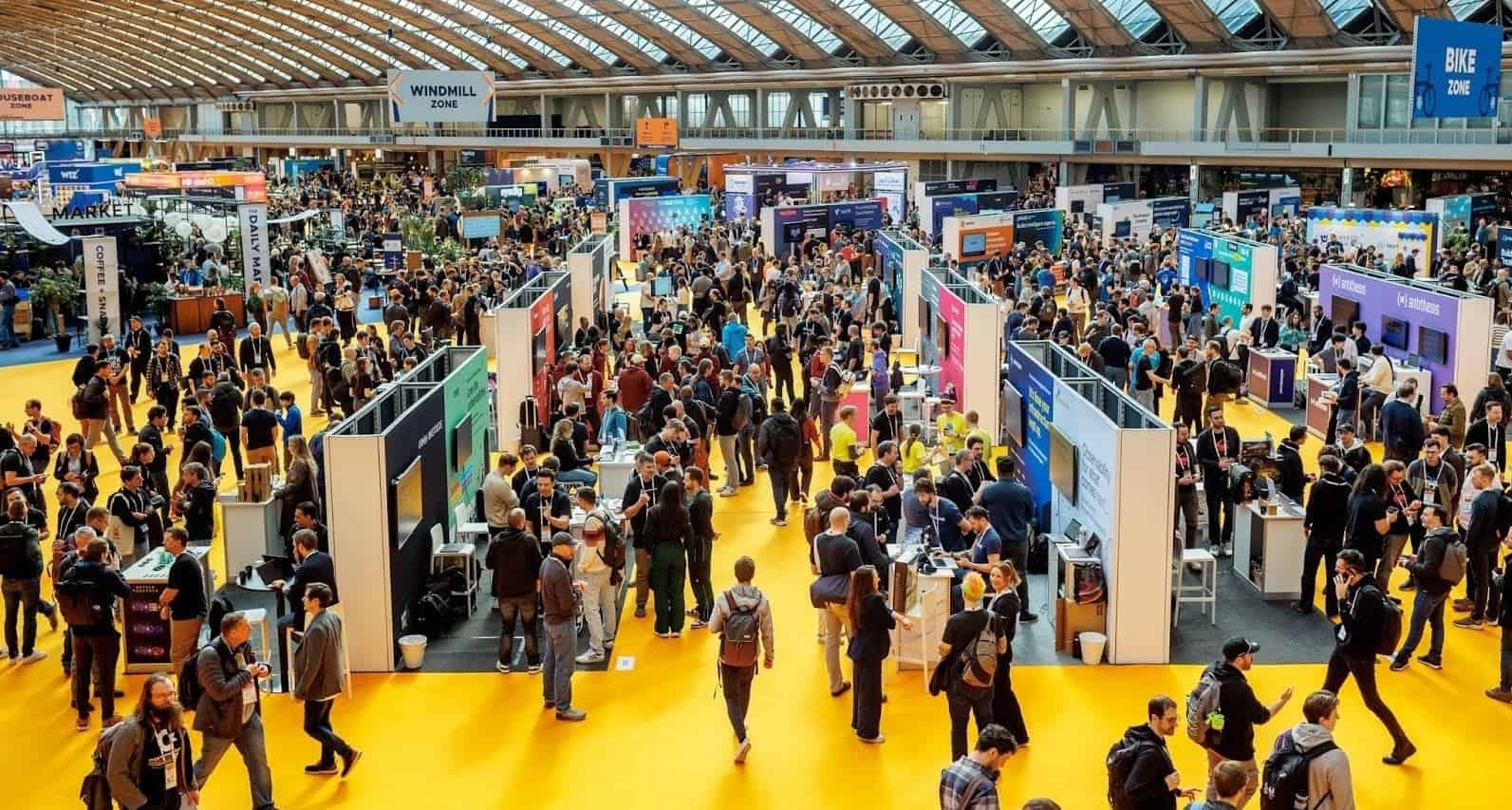
The Solution Showcases
I also spent a lot of time walking around the solution showcase.
There were tons of booths from companies and open-source projects. At the project pavilion, I talked to maintainers and contributors, which was honestly one of the most interesting parts. Hearing what motivates people to contribute to open source made me want to get more involved myself.
The scale of the event was kind of crazy: so many companies, all trying to stand out. A lot of booths had games, demos, or free swag to grab your attention.
I had to limit myself, though (luggage space is real), so I mostly stuck to the essentials: a conference T-shirt and the speaker gift, along with a few cute toys.
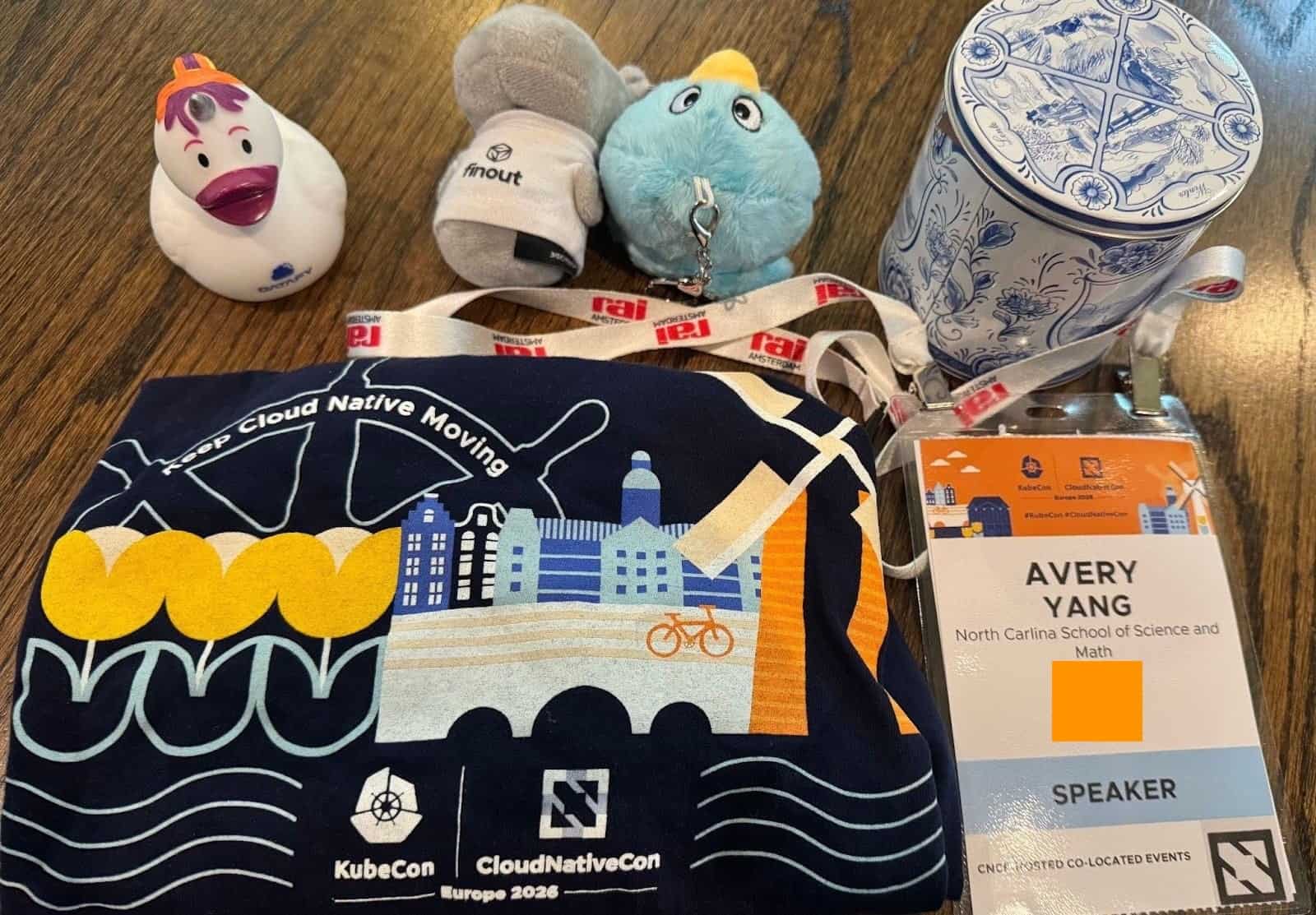
A funny thing that kept happening was people noticing my badge and going, “Oh! You’re a speaker?!” Then I’d end up explaining my project all over again.
Also, I tried fresh stroopwafels for the first time (from a booth at the event), and they were really good.
A Little Touring
Before heading home, I spent one more day in Amsterdam, where I visited the Keukenhof Gardens and tried the famous Dutch fries on the streets of Amsterdam.

Final Thoughts
KubeCon + CloudNativeCon Europe 2026 felt like more than just a conference; it felt like a community. People weren’t just there to present; they were there to learn from each other, share ideas, and push things forward, especially in areas like AI and sustainability.
I left Amsterdam feeling energized and inspired. It made me appreciate how powerful open source and cloud native technologies can be, especially when people collaborate around them. And for me personally, it was a reminder that even as a student, you can contribute something meaningful to a global community leveraging open source.