
KubeCon + CloudNativeCon Europe 2026 in Amsterdam highlighted the evolution of cloud native practices, particularly in platform engineering, and the growing focus on inclusion and accessibility within the community. This year’s conference emphasized that technical success is inseparable from human factors: the ways engineers work together, the diversity of their experiences, and the structures that support participation.
Platform engineering beyond tools and infrastructure
Platform engineering has traditionally been framed around internal developer platforms, automation, and workflow orchestration. While these technical elements are necessary, sessions at KubeCon + CloudNativeCon EU stressed that the usability and effectiveness of platforms depend heavily on the perspectives of the engineers who build and maintain them.
A key session explored how platform teams can benefit from integrating varied viewpoints, featuring two CNCF Community Leaders — an OpenTelemetry contributor and Merge-Forward Lead and a CNCF Ambassador. The discussion highlighted several areas where diversity of experience influences platform design:
- Abstraction boundaries: Decisions about what to expose to developers and what to manage internally affect usability, maintainability, and adoption.
- Self-service workflows: Platforms that empower teams to operate independently require careful design, informed by the needs and expectations of diverse users.
- API touchpoints and integration points: Thoughtful design of APIs can reduce friction and prevent misalignment between platform capabilities and developer workflows.
- Onboarding paths and documentation: Clear, accessible onboarding and documentation practices increase the likelihood that platforms are adopted and maintained effectively.
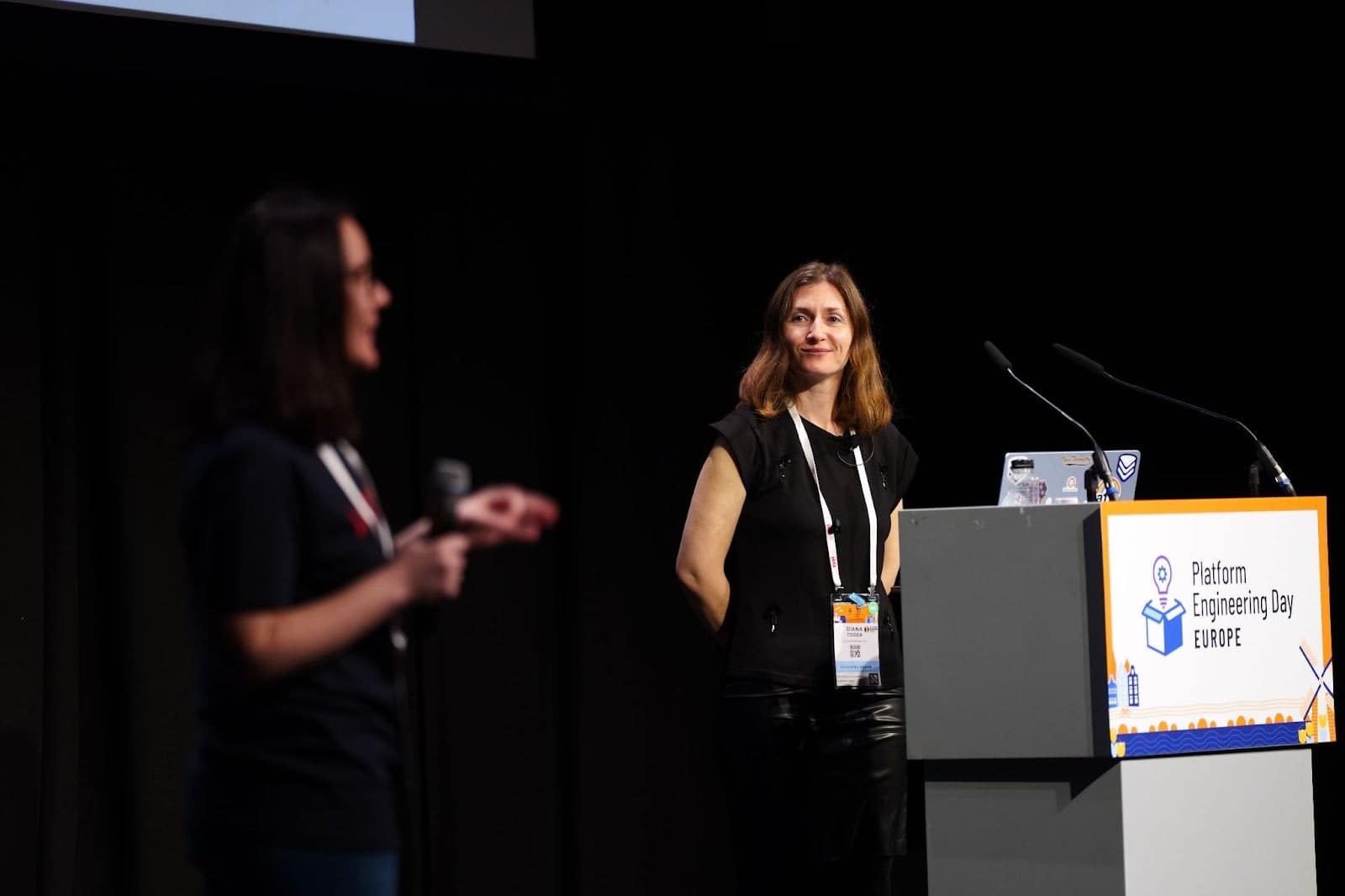
My talk “Who Built This Platform” presented along Elif Samedin (AirDNA) also emphasized practical strategies for platform teams. By refining decision-making processes, optimizing feedback loops, and fostering participation within CNCF technical groups, teams can build platforms that are not only technically robust but also easier to adopt and scale. These approaches highlight a broader trend in platform engineering: success is defined not only by technical outputs but by how well platforms support their users, ultimately posing the question: who are we building platforms for in the first place?
Designing for belonging: Merge Forward panel
Complementing the technical discussion, a Merge Forward panel examined the social dimensions of platform engineering. Platform teams often encounter challenges not in YAML configurations or API design, but in attracting and retaining talent. Skilled engineers may hesitate to apply for platform roles if they do not feel they belong, creating gaps in innovation and team capacity.
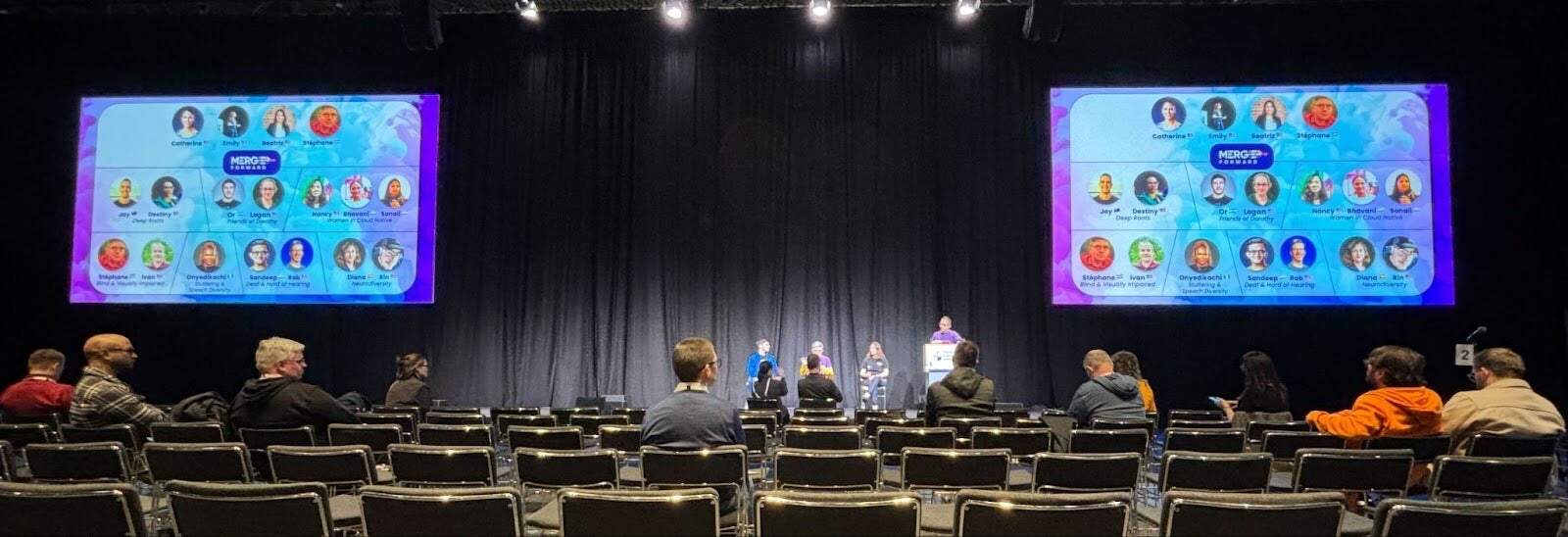
Merge Forward is a CNCF initiative uniting community groups focused on disability, gender, neurodiversity, and speech diversity. The panel demonstrated how considering inclusion and belonging as core design principles can improve outcomes for platform teams. Key observations included:
- Developer experience (DevEx) improves when teams are designed around inclusive practices.
- Platform adoption increases when contributors feel welcome and empowered.
- Team retention benefits from culturally supportive environments.
- Organizational outcomes improve when human factors are incorporated into platform design, as teams become more resilient and adaptable.
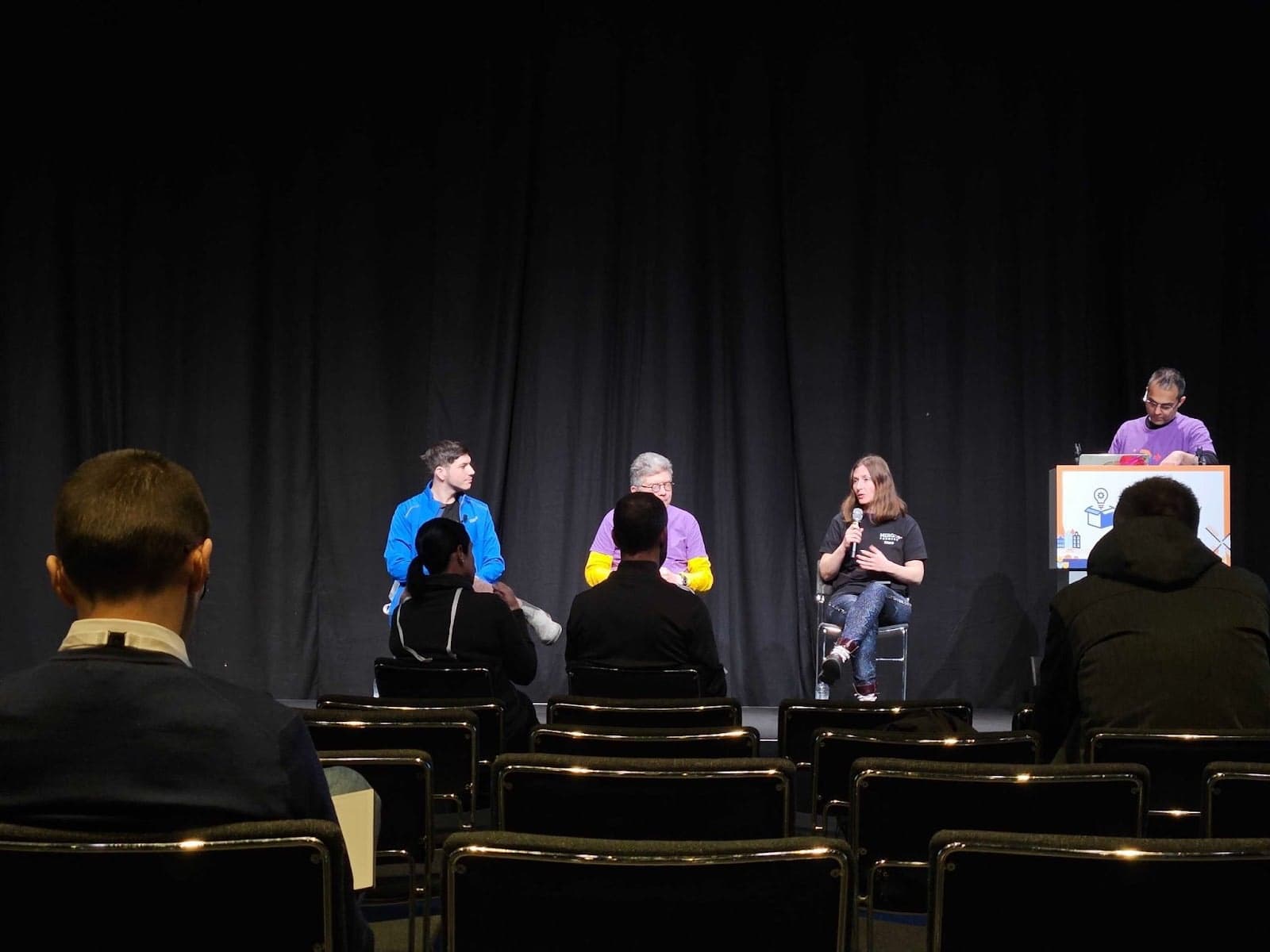
Through stories from platform engineers, the panel illustrated that practices such as empathy, accessibility, and allyship are not just social ideals but practical levers that enhance team performance and platform maturity. In this context, we highlighted that resilience is built not only into systems but between people, underscoring the socio-technical nature of platform engineering.
Neurodiversity Community Hub: Making invisible experiences visible
A new addition to the Community Hub this year was the first dedicated session on neurodiversity, acknowledging the presence and contributions of neurodivergent individuals in tech while recognizing the barriers they often face. Neurodivergent engineers frequently encounter structural challenges—from hiring processes to conference networking and open source contributions—that are not addressed by technical proficiency alone.
I was deeply moved to be leading this interactive session, which provided a practical space for discussion and reflection, structured around short exercises and real-world scenarios. Attendees explored:
- How neurodiversity shows up in tech communities.
- Tools and practices that reduce barriers and support diverse contributors.
- Practical techniques that participants could apply immediately in workplaces, open source projects, and community initiatives.
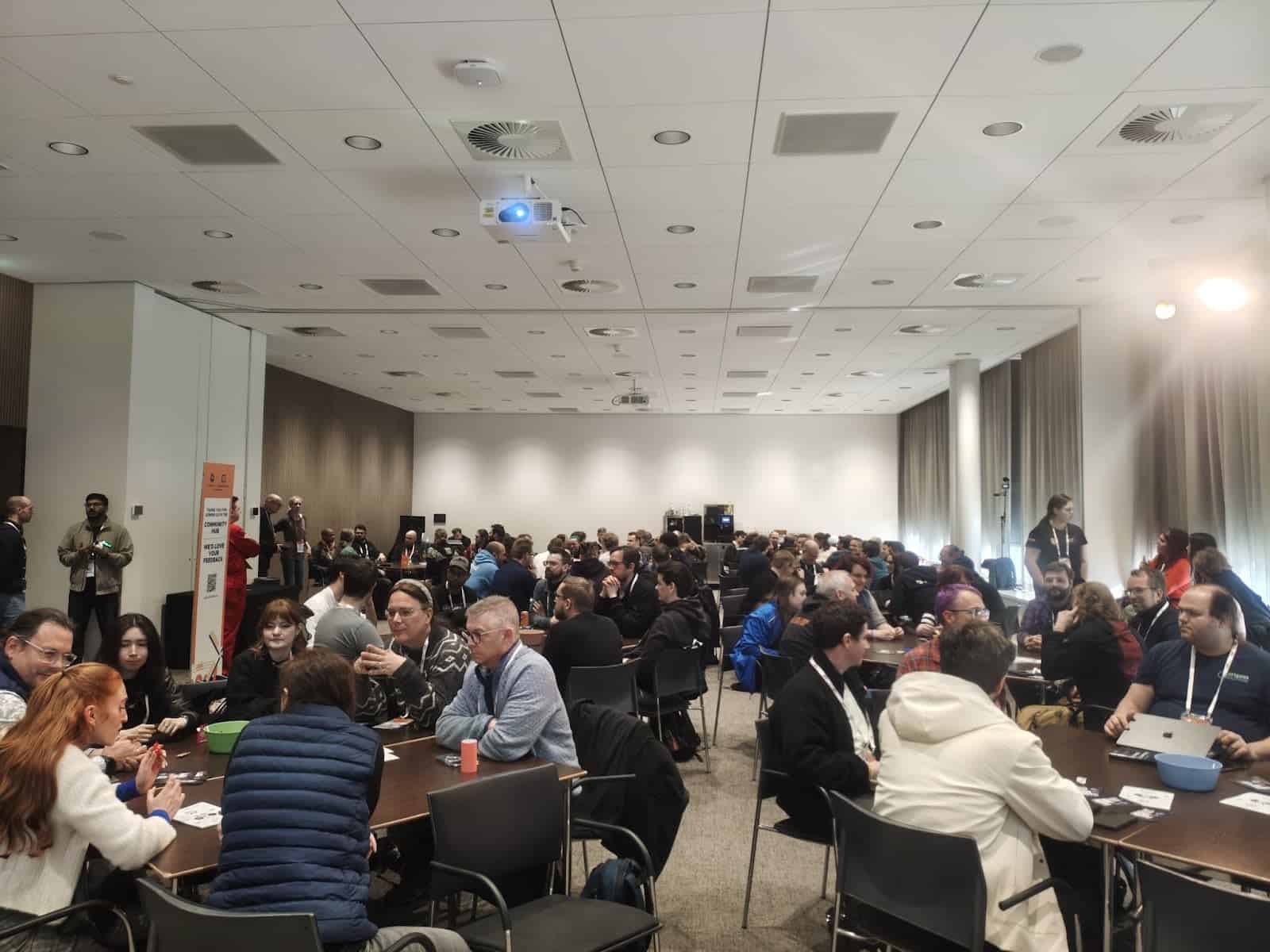
By creating a space for shared learning and experimentation, the session highlighted the value of recognizing and supporting diverse ways of thinking. It reinforced insights from the Merge-Forward panel: inclusive practices strengthen communities, enhance collaboration, and ultimately contribute to the sustainability of projects and platforms.
Connecting technical and human perspectives
Together, these sessions illustrate that platform engineering is intrinsically socio-technical. While internal developer platforms and automation pipelines remain central, the most sustainable and widely adopted platforms are those shaped by the experiences and perspectives of the people who interact with them.
Several patterns emerged across the talks and discussions:
- Participation shapes outcomes: Platforms benefit when decision-making involves diverse contributors who can identify gaps, anticipate edge cases, and optimize usability.
- Cultural practices affect technical success: Teams that invest in belonging, accessibility, and inclusive practices experience better adoption and retention, showing that organizational culture and platform health are deeply interconnected.
- Learning and reflection accelerate improvement: Both technical and human-centered sessions emphasized feedback loops—within teams, across communities, and in open source projects—as essential for refining platforms and practices.
- Communities extend beyond code: KubeCon EU reinforced that conferences and community initiatives are not only opportunities to share technical expertise but also to create environments that reflect and reinforce inclusive values.
By integrating these insights, platform teams can design systems that are more resilient, scalable, and usable, while contributing to a healthier, more diverse cloud-native ecosystem.
Looking forward
KubeCon + CloudNativeCon EU 2026 demonstrated that platform engineering is evolving. Beyond technical considerations, the discipline increasingly involves understanding the human factors that shape adoption, maintainability, and long-term impact. The Merge-Forward panel and neurodiversity session provided concrete examples of how community-led initiatives and inclusive practices can inform platform engineering in practical, measurable ways.
As cloud-native communities continue to grow, the lessons from KubeCon +CloudNativeCon Amsterdam suggest that the most effective platforms will be those built not only with technical expertise but also with empathy, inclusivity, and collaboration at their core. Recognizing diverse perspectives—across technical experience, cognitive styles, and social identities—is not an optional value-add but a foundational aspect of sustainable platform engineering.