
As we begin 2026, it’s worth reflecting on the remarkable progress we made with k0s as a project and as a community during 2025. Last year brought exciting advancements, adoption, and stronger community engagement.
k0s is an open-source, single-binary Kubernetes distribution designed to be lightweight, simple to deploy, and highly flexible. The project aims to reduce the complexity of setting up and managing Kubernetes clusters.
This 2025 review highlights the key milestones for k0s last year and paints a picture of the momentum carrying us into 2026.
Major features and releases
Last year, the k0s project continued to deliver enhancements focused on stability, extensibility, and multi‑environment operations..
Key improvements included:
- Stable releases
The k0s project had a total of 39 stable releases done in total. Kubernetes 1.34 is supported now; whereas Kubernetes 1.31 & 1.30 are already end of life.
- Operational and environmental flexibility
Enhanced features tailored for edge use cases, improving resource efficiency and resilience in constrained environments. Usability improvements in installation, upgrades, and automation to lower the barrier for adoption while enabling more flexible deployment profiles for different workloads. - Security and governance focus
The k0s community has invested in security hardening, policy interoperability, and observability integrations to support end-users.
k0s recent and upcoming highlights
- Dynamic control plane load balancer
A built-in control plane load balancer now simplifies HA setups. It supports both IPVS and user-space backends for flexible environments. - –kubelet-root-dir flag
This lets users override default kubelet data paths (/var/lib/kubelet), improving compatibility with non-standard or constrained environments. - nftables support (GA in v1.33)
Modern firewall support with nftables is now stable, replacing iptables as default on most modern Linux distros. - Declarative Etcd member management
It enables GitOps-style configuration of etcd cluster membership — safer scaling and recovery workflows. - OCI registry-based extensions
This supports deploying Helm charts and other extensions from OCI-compliant registries, standardizing distribution and updates. - Windows node support (Alpha in v1.34)
Early support for Windows workers is now available, with basic functionality and room for community contribution. - RISC-V architecture support
k0s can be built for RISC-V platforms. While binaries aren’t officially released yet, the groundwork is there, pending infra testing.
These enhancements have helped k0s deliver production‑ready performance across diverse infrastructures while preserving the simplicity that defines the project.
k0s joining the CNCF sandbox
In early 2025, k0s achieved a major milestone by being accepted into the CNCF Sandbox program.
Being part of this program positions k0s to accelerate its development through broader community engagement and feedback, enabling deeper interoperability and innovation.
Joining the CNCF Sandbox underscores the project’s commitment to open governance and community‑driven innovation, and opens doors for closer collaboration with other CNCF initiatives.
k0s CNCF incubation application
k0s has formally submitted its CNCF incubation application, marking a key step toward broader community governance and ecosystem alignment within the CNCF. This move reflects the project’s maturity, growing adoption, and commitment to open collaboration, inviting increased contributions and tighter integrations.
Community growth and adoption
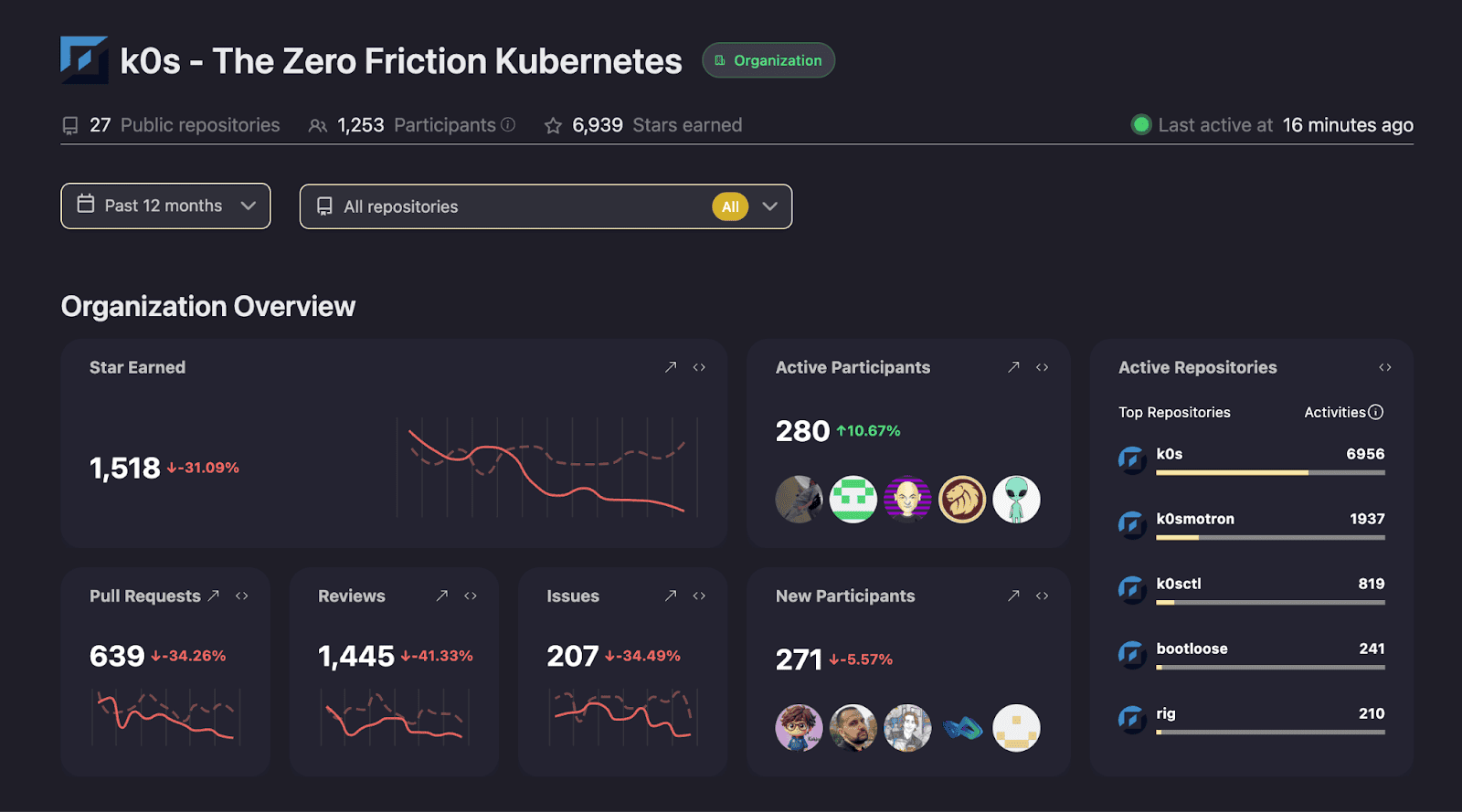
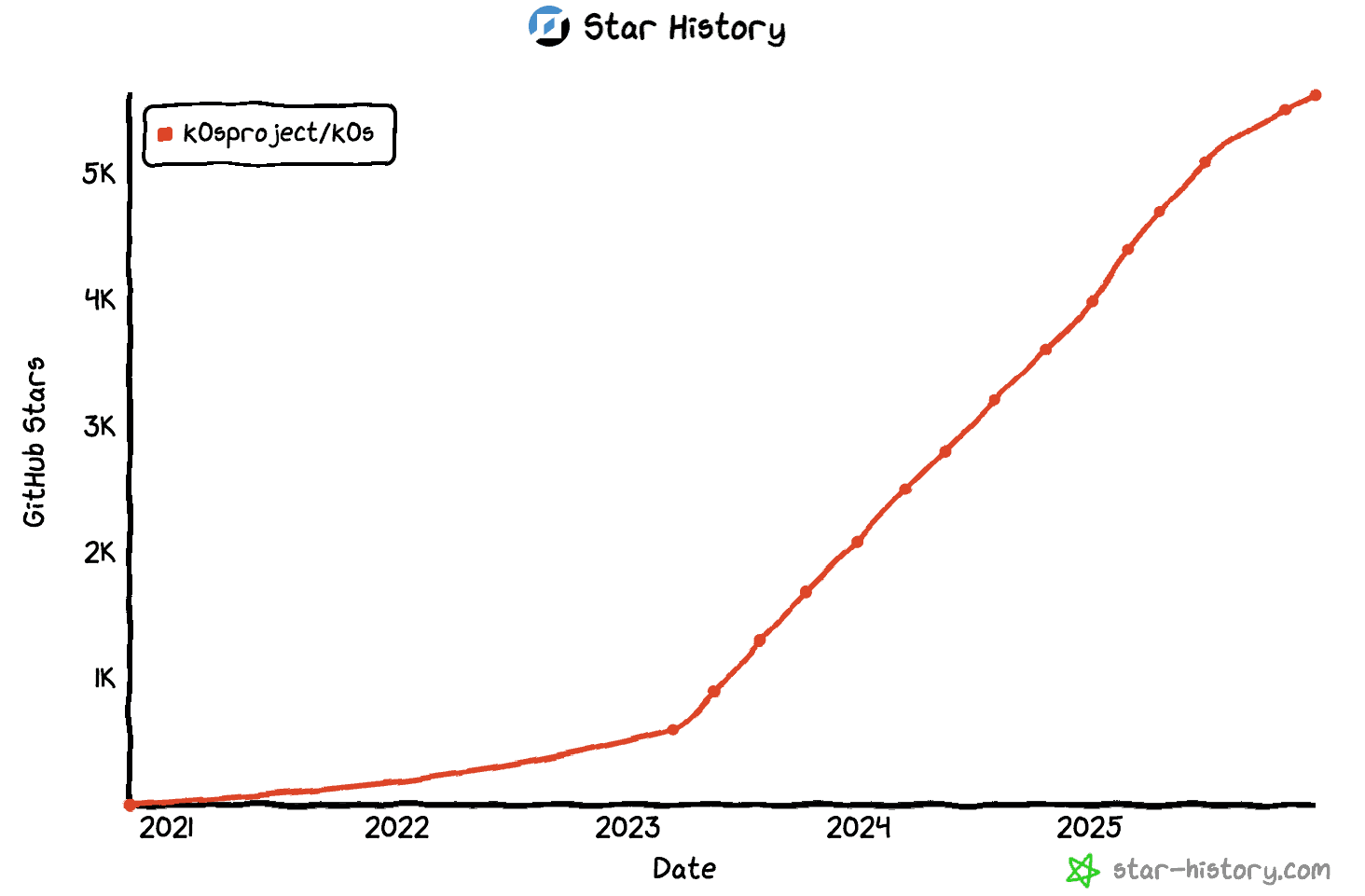
At the heart of any open source project is its community. In 2025, the k0s community saw remarkable growth:
- Increased adoption and contributor expansion
Organizations across industries began using k0s as a foundational layer for Kubernetes operations from startups to large enterprises.Contributions in code, documentation, tooling, and testing accelerated, resulting in a broader set of maintainers and contributors participating in shaping the project.
- Steady community calls
The k0s project has maintained regular community calls, offering a transparent space for discussion, updates, and roadmap alignment. - Growing community activity
Contributor engagement continues to rise. More developers are joining discussions, submitting PRs, reporting issues, and collaborating on features. - Community-driven public roadmap
The k0s roadmap is shaped by community input. Feature requests, issue prioritization, and planning are increasingly community-led, ensuring that development stays aligned with real user needs.
Events and community activities
Community engagement was a highlight this year:
- k0s featured prominently in cloud‑native events, meetups, and community discussions.
- Local meetups, training sessions, and virtual events helped lower the barrier to entry and brought practitioners together around shared challenges.
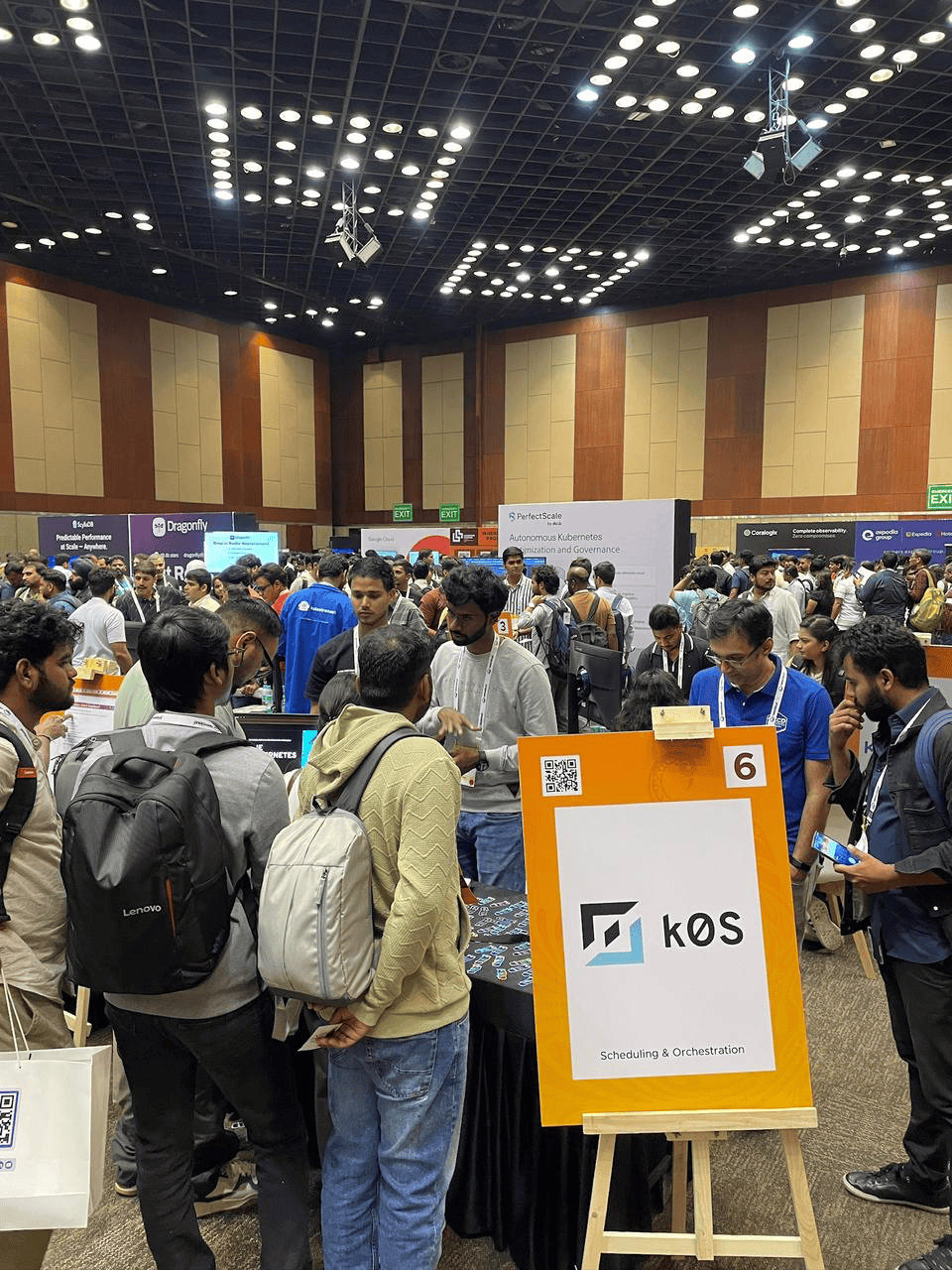
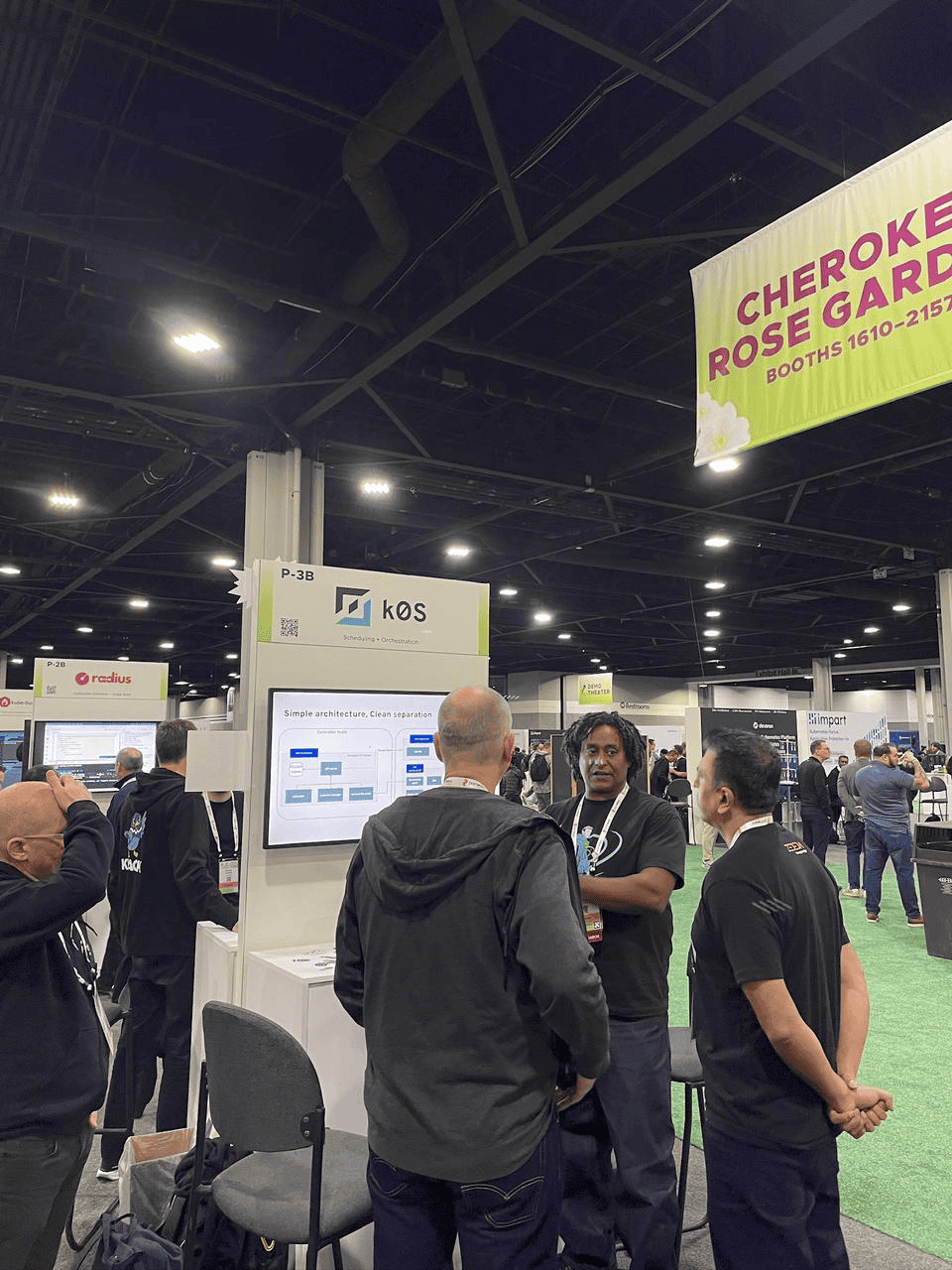
After becoming a Sandbox project, k0s joined KubeCon India and KubeCon North America with a project lightning talk, contribfest session and a k0s booth.
Looking ahead: What’s on the horizon for 2026
This year is set to bring major innovations in both stability and flexibility as the k0s project continues to evolve as a modern Kubernetes distribution. Here’s what’s on the horizon:
k0s v1.35 release (Target: Feb 2026)
The upcoming v1.35 release is focused on improving the control plane experience, operational observability, and base compatibility.
Upstream alignment
k0s remains tightly aligned with upstream Kubernetes releases. As Kubernetes introduces new APIs, container runtimes, and network stack changes, k0s ensures timely support and testing for seamless adoption.
Deeper community collaboration
The team plans to work more closely with the community during 2026 particularly around features, release planning, testing, and supporting new environments.
Support for containerd 2.x
With containerd 2.x now on the horizon, k0s will ensure compatibility and smooth migration paths. This is vital for long-term runtime stability and ecosystem interoperability.
Enhanced operational capabilities
Several key operational improvements are in development:
- Etcd management enhancements: More robust lifecycle controls and better recovery workflows.
- Graceful control plane node termination: Reducing disruption during planned node shutdowns or scaling events.
Transparent roadmap
A public roadmap on GitHub helps users and contributors stay aligned with priorities, milestones, and open discussions. It’s a key part of making k0s more community-driven and predictable.
Gratitude and invitation
We are excited about what’s ahead and invite you to continue contributing, collaborating, and building with k0s in 2026.
Here’s to an even stronger, more vibrant ecosystem in the year ahead.
k0s community
The k0s community discussions will commence on the Kubernetes Slack Workspace. Join the #k0s-users & #k0s-dev channels to ask your questions, share your user stories and discuss your contributions with the maintainers.
To get an invite please fill out the invitation form. You can also review the meeting notes for the community office hours.