

Attending OpenSearchCon, OpenSSF Day, and the Open Source Summit in Seoul was a truly memorable experience, especially because this was the first-ever Open Source Summit hosted in South Korea.
I have previously attended two KubeCons in India including the Open Source Summit in Kubecon Hyderabad, but experiencing a Linux Foundation conference in another country offered a completely new perspective. Thanks to the Linux Foundation for sponsoring me to make this journey possible.
Key Sessions
The events were packed with insightful sessions. Here are a few of the most interesting talks I attended, focusing heavily on AI, Observability, and LLM performance. You can find the slides and recordings via the official event links and on YouTube.
Keynote: Linus Torvalds (Creator of Linux & Git) in conversation with Dirk Hohndel (Head of the Open Source Program Office, Verizon) Link
Tutorial: Building Custom MCP Servers With FastMCP and Integrating AI Agents Using Google ADK – Mehmet Hilmi Emel (Acedemand) Link
Who Ate My Resources? Trace LLM Performance in Real Time With OTel – Aditya Soni (Forrester Research) & Seema Saharan (Autodesk)
Beyond Keywords: Building an AI-Powered Search That Reads Your Mind – Prashant Agrawal (Amazon Web Services)
From Telemetry to Insight: Building AI-Powered Observability Pipelines with OpenSearch – Neel Shah (Middleware) Link
Standardizing the Unstandardized: Securing AI Supply Chain With Model-Spec and Kitops – Prasanth Baskar (8gears) Link
Event Schedules and Resources You can find the full schedules and details here:
My key takeaways
AI – The central theme
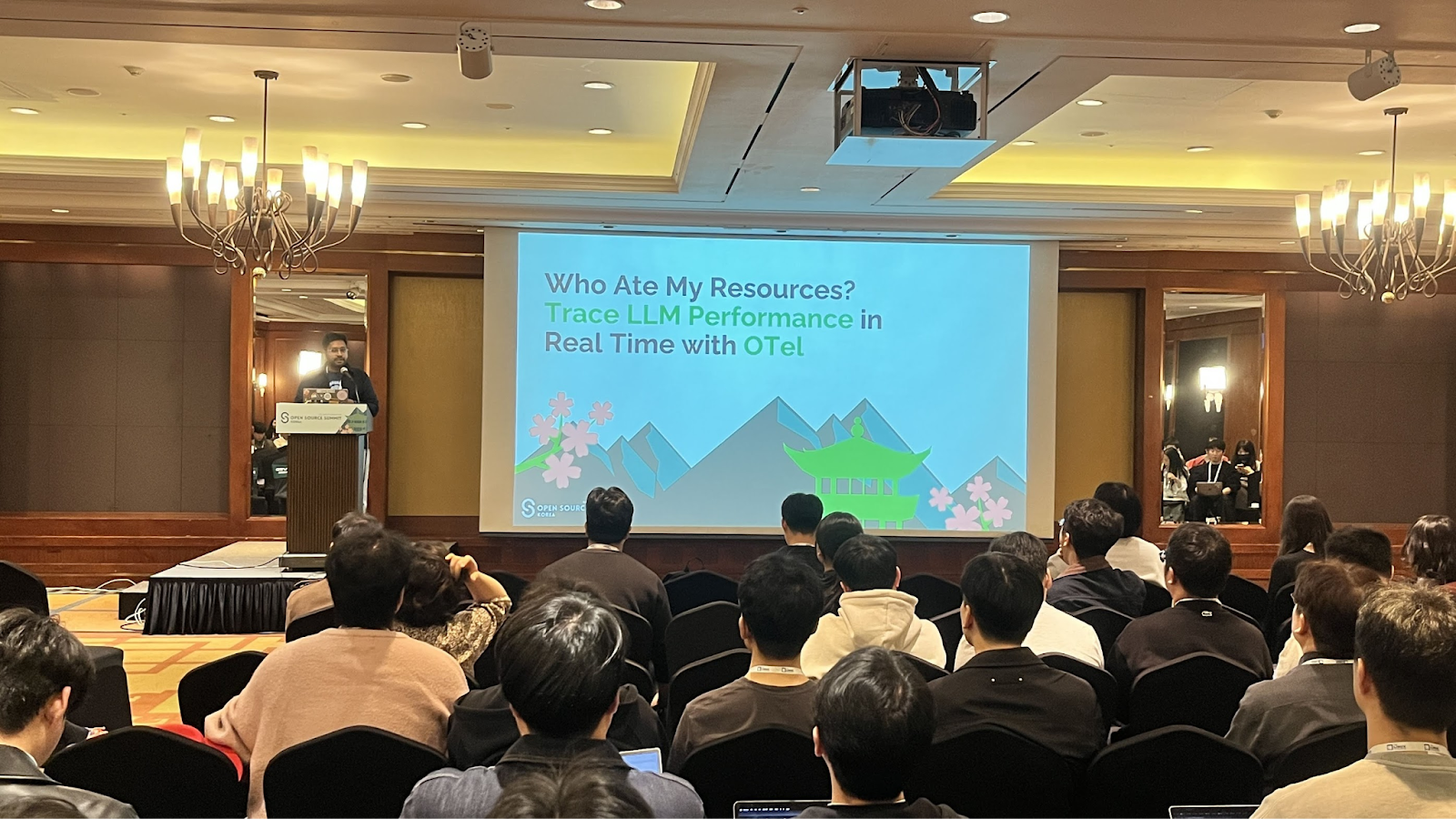
2025 truly felt like the year of AI. As with much of the current tech landscape, there were countless talks and sessions centered around AI and its related technologies.
Jung-Woo Ha delivered a keynote on AI that genuinely shifted how I think about the field. As the Senior Secretary to the President for AI and Future Planning in Korea, he offered a rare policymaker’s perspective on how countries are preparing for large-scale AI adoption, covering responsible AI, infrastructure readiness, and national research strategies.
David Hirsch from Dynatrace talked about OSPOs, Open Source Program Offices and how enterprises govern open source at scale.
Jay Lee from Microsoft shared insights into how they build and run on open source. Hearing directly from someone involved in that ecosystem highlighted how large organizations collaborate with community-driven projects while maintaining internal reliability and security.
I felt fortunate to attend those events and learn directly from people who are actually developing and deploying many of the tools shaping today’s technology landscape.
Meeting Linus Torvalds and others leaders
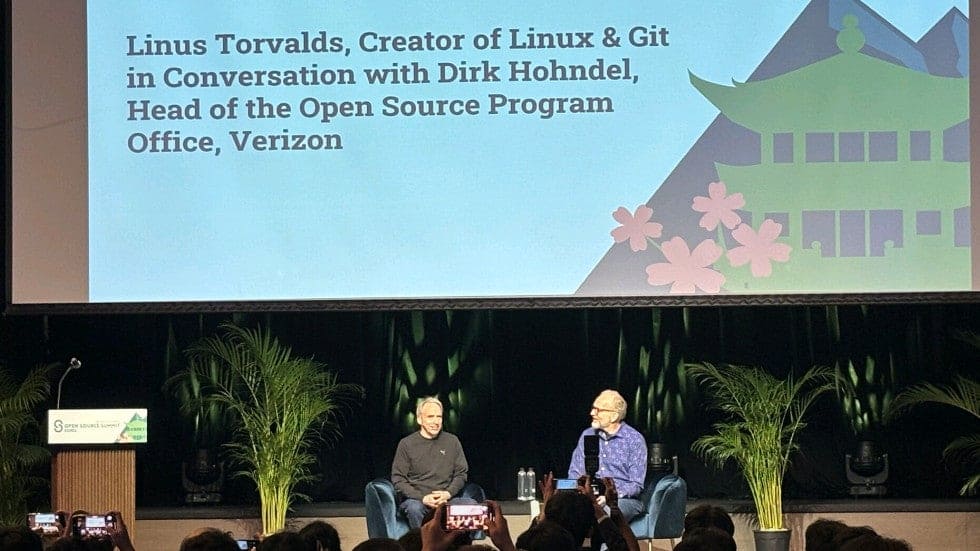
A major personal highlight of event was seeing Linus Torvalds, the creator of Linux and Git, in person. Hearing him speak live provided a perspective I had previously only encountered through books, interviews, and mailing list threads.It was an unforgettable moment.
I also met Hoon Jo, a CNCF Ambassador, and Ryan Madubala, the creator of GitMesh, who is very active in the community especially in the LFX DT domain. It was great to connect with both, and we talked a lot about tech culture in Korea.
Linux mentorship showcase
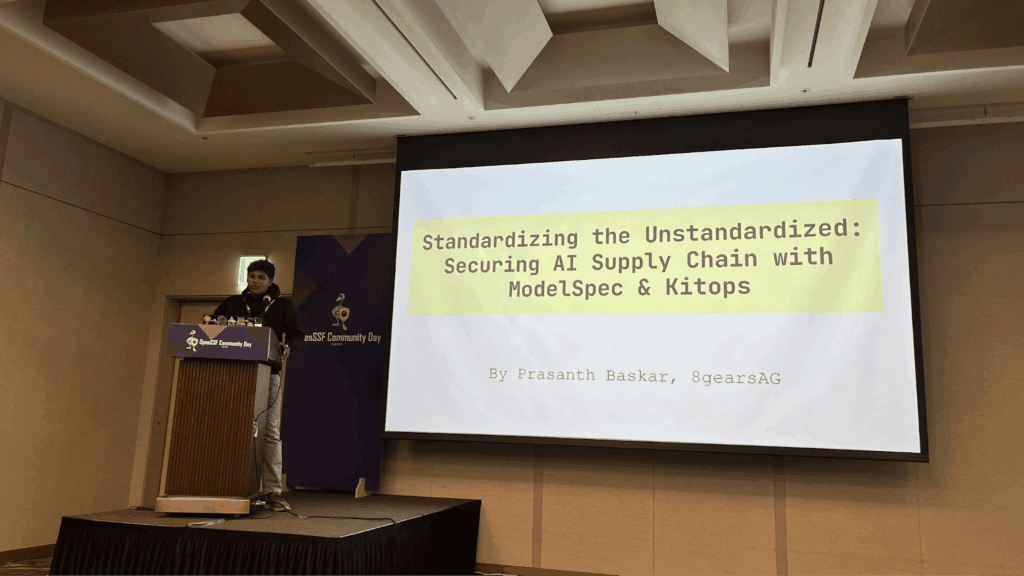
The LFX Mentorship Showcase is an opportunity for graduating mentees of the LFX Mentorship program to showcase the work they completed during their session term.
There was a dedicated booth featuring several impressive projects, including the work of Prasanth and Anuj Agarwal. Anuj worked on Enhance Karmada controller-manager and schedule testing coverage (LFX 2024 TERM 3) and Prasanth helped on the Harbor satellite project to deploy and manage container registries on edge.
As someone who has been part of the LFX and GSoC ecosystem, it was great to see new contributors stepping up, taking ownership, and making substantial contributions to major open-source projects.
Networking and swag
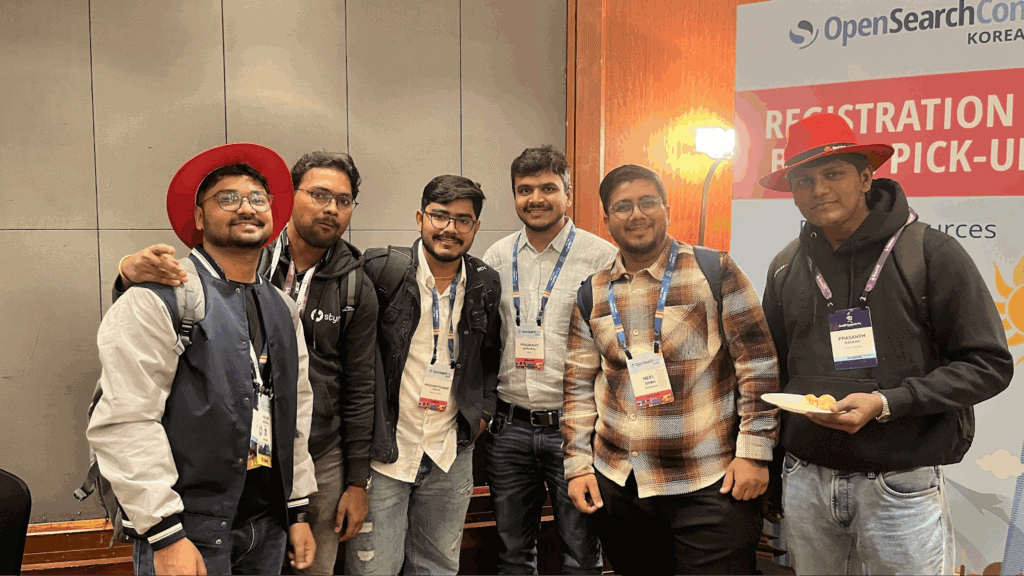
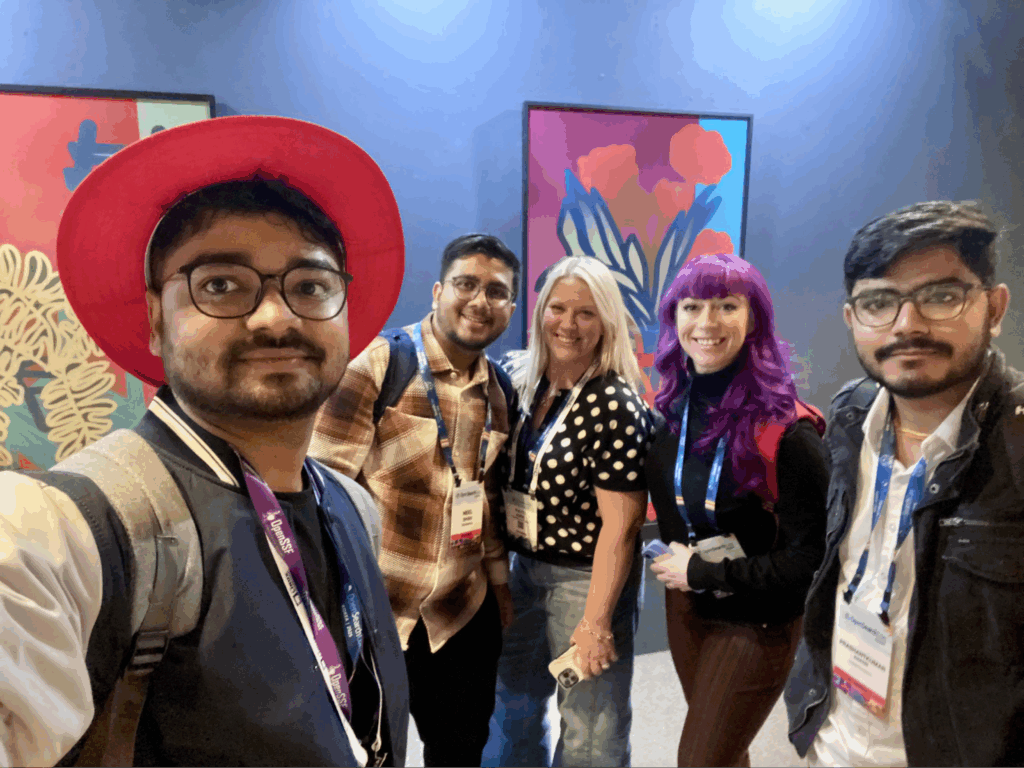
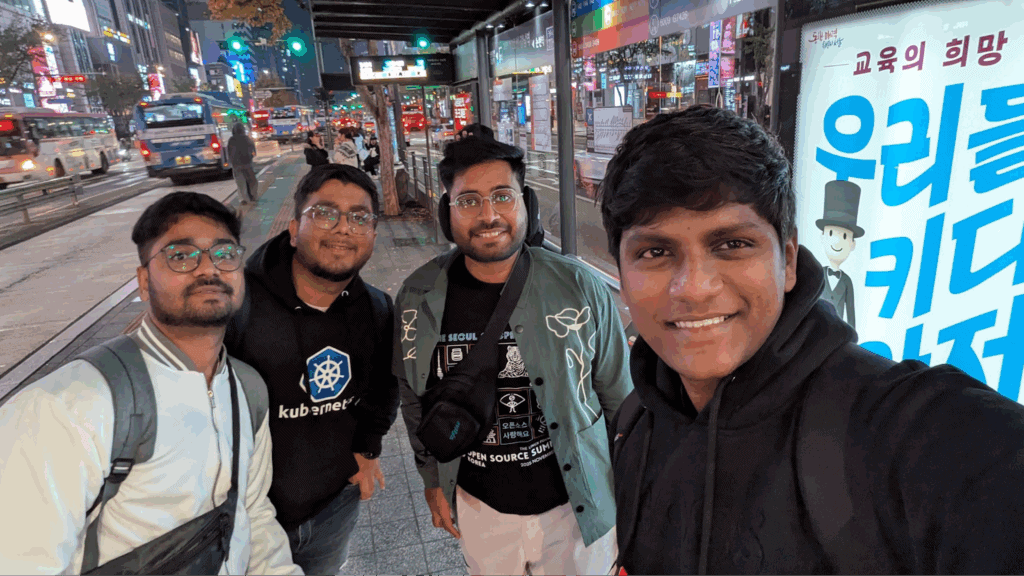
The best part of these events is the networking. On the first day I met the speakers from India, Neel Shah and Aditya Soni. I met many developers and researchers based in South Korea and had great discussions about how the tech field differs there compared to India.
And, of course, no tech conference is complete without swag! Various booths gave out great items for completing tasks like quizzes,etc. The swags included T-shirts, hats, and bags. For the first time, I received lip balm and nail cream as swag — definitely the most unexpected and fun additions to my collection so far.
Seoul: City, culture, and food
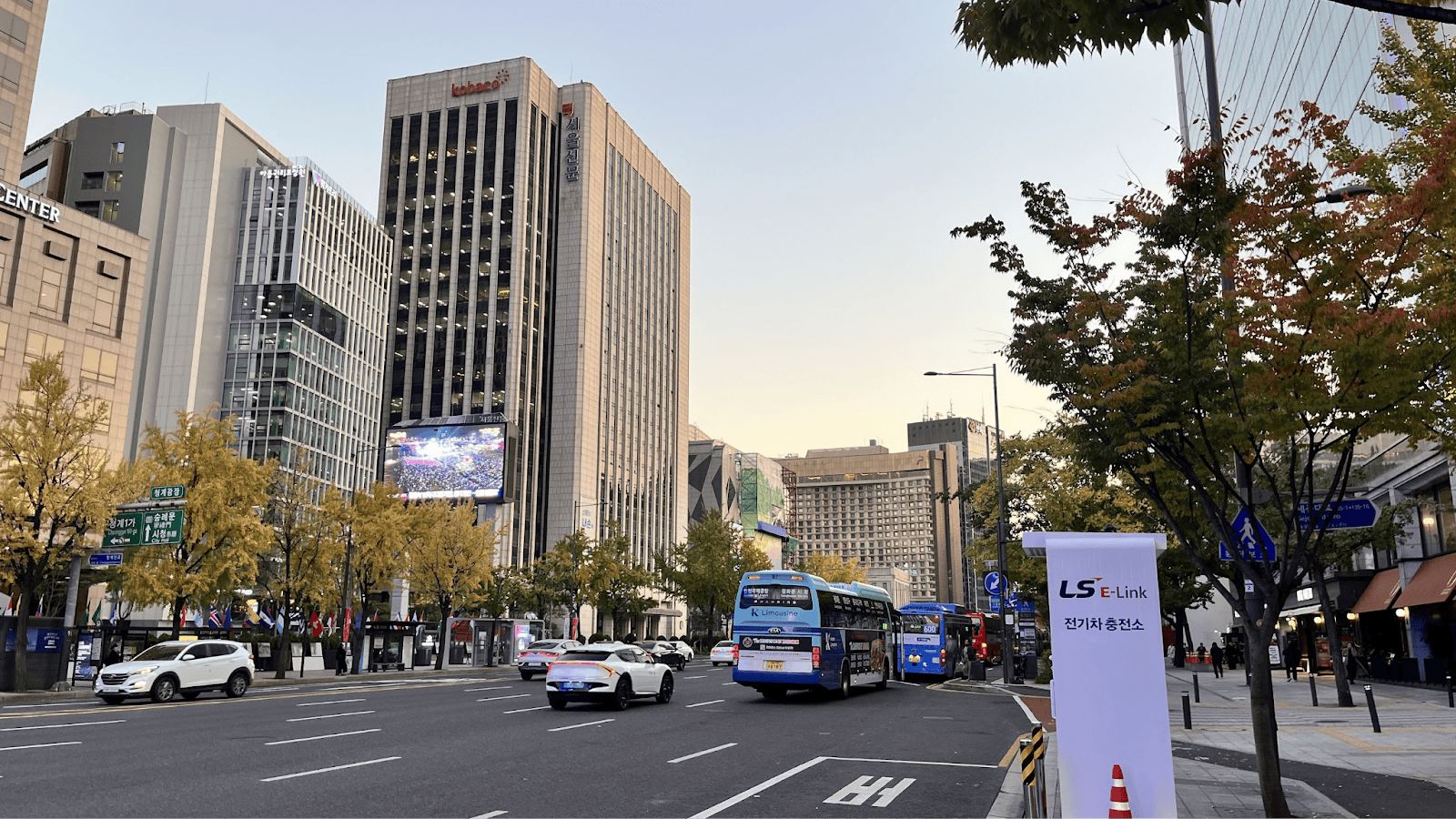
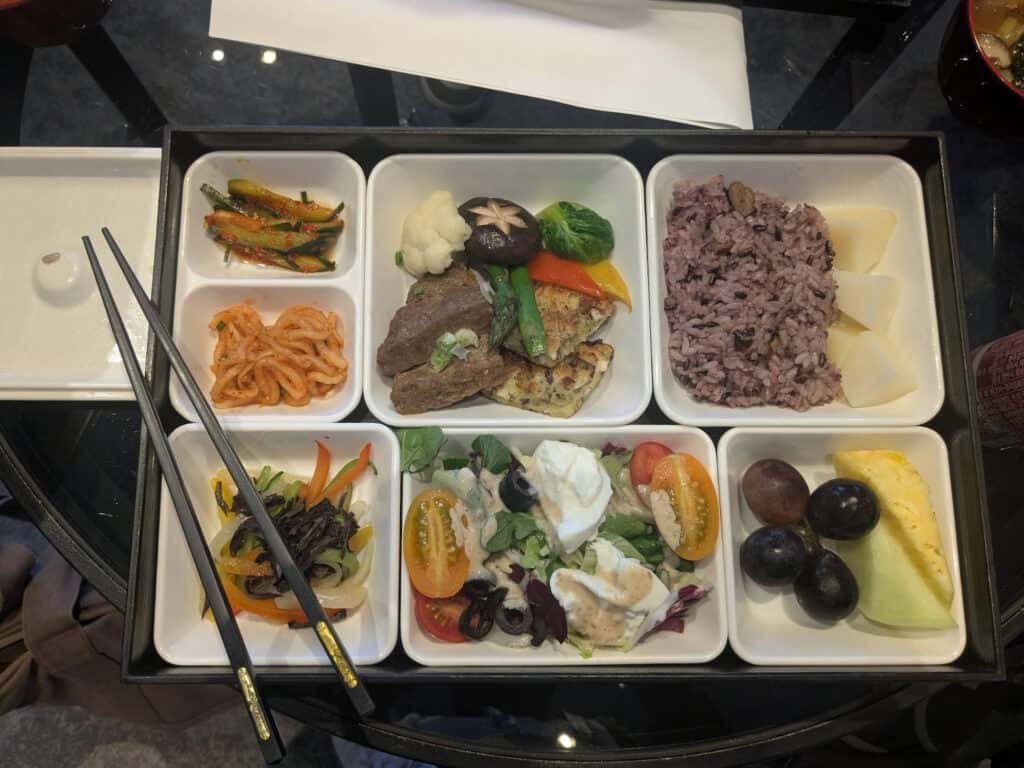
Seoul is one of the most beautiful cities I have ever visited. It has an amazing blend of modern infrastructure while still preserving its traditional charm and ancient sites. And of course, the food offered incredible variety. From street stalls to local restaurants, everything had its own flavor and story. Whether it was Korean barbecue, baked goods, or quick snacks from convenience stores, the variety was endless and genuinely memorable.
After the conference, we spent the third day exploring the city, visiting local markets, and doing some shopping for ourselves and friends back home in India. It was the perfect way to wrap up the trip.

Tips for first timers
Attending a busy event for the first time can feel overwhelming, but with a bit of planning, you can make the most of the experience. Here are a few tips based on what worked well for me:

📌 Plan your schedule smartly
Check the conference schedule and mark the sessions that interest you the most. Events as widescale as Open Source Summit or KubeCon +CloudNativeCon have a lot of sessions which you might miss if you don’t plan ahead. Linux Foundation and CNCF provide event schedules on the Sched app, so you can easily mark your favorites and keep your schedule to hand.
🤝 Network actively
Being open to meeting new people and engaging in discussions is essential, and networking is one of the most rewarding aspects of attending these events.
Speak with the presenters and maintainers; many of them are among the best in the world in their fields. Ask them questions, seek advice, and learn from their experiences. You’ll be surprised how approachable most open source contributors are.
🌱 Stay active in local communities
Your local CNCF or open source communities can be a great gateway to larger events. Attend meetups, contribute where you can, help newcomers, and stay plugged into the ecosystem.
Local engagement often opens the door to global collaboration and opportunities.
Final Thoughts
This entire experience, from the sessions to the people to the culture, reminded me why I love open source. The community is full of passionate, welcoming, and incredibly talented individuals who want to build, learn, and share together.
About me
I’m Akash Jaiswal and I work at Oracle as a Software Engineer in the Cloud and DevOps space. Outside of work, I’m passionate about contributing to open source, attending and speaking at communities and travelling
I was also a GSoC 2025 contributor at Kubeflow and GSoC 2022 contributor at CC Extractor, and since then, I’ve been actively involved in CNCF projects like KubeFlow, Volcano, K8s, etc.
